
25 Years of Modi: From Seva Sankalp to Viksit Bharat
- October 07, 2026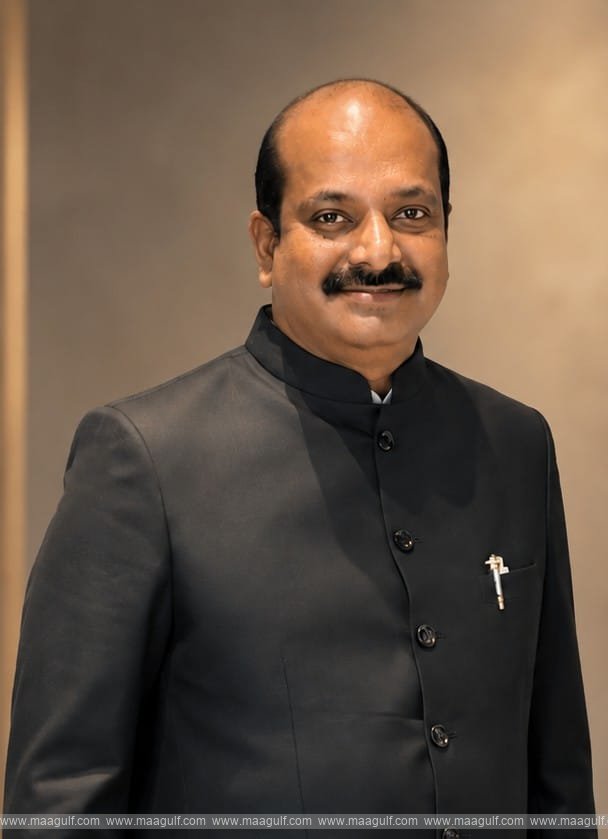
October 7, 2026 marks twenty five years since Narendra Modi assumed public office as the Chief Minister of Gujarat. What began in 2001 as an unexpected transition from organisational politics to constitutional office has since evolved into one of the longest continuous political journeys in contemporary Indian public life. From Gujarat to New Delhi, the defining feature of this journey has been an emphasis on governance, development, technology, welfare delivery and the articulation of a long term national vision.
The significance of twenty five years is not merely numerical. Political leadership is ultimately measured by the ideas it introduces, the institutions it strengthens, the policies it implements and, most importantly, the extent to which those policies translate into changes in the lives of ordinary citizens.
When Narendra Modi took charge of Gujarat in October 2001, the state was recovering from the devastating earthquake of January that year. The scale of reconstruction and rehabilitation was enormous. Gujarat was also dealing with water scarcity, administrative challenges and public dissatisfaction. His initial years in office therefore became a period of institutional and administrative experimentation, with an emphasis on time bound implementation and infrastructure development.
Initiatives such as Vibrant Gujarat and Jyotigram reflected an approach that sought to combine investment, infrastructure and basic service delivery. The experience acquired in Gujarat subsequently became part of the larger political and administrative framework that Modi carried to the national level after 2014.
His transition from state politics to national leadership represented another important moment. In 2014, the BJP secured a parliamentary majority after three decades in which no single party had achieved such a majority on its own. Since then, the Union government has pursued a wide range of programmes spanning financial inclusion, infrastructure, manufacturing, digital governance, social welfare, national security and foreign policy.
One of the more consequential changes has been the growing use of digital infrastructure for public welfare. The combination of Jan Dhan bank accounts, Aadhaar identification and mobile connectivity created a framework for direct benefit transfers and wider financial inclusion. According to the material provided, as of September 16, 2026, the Pradhan Mantri Jan Dhan Yojana had 59.31 crore accounts, including 33.04 crore accounts held by women.
This shift is important because welfare policy is not only about announcing schemes. Its effectiveness also depends on whether benefits reach the intended recipient with minimum leakage and delay. Direct transfers have increasingly become an important part of India's welfare architecture.
Agriculture has similarly seen greater emphasis on direct financial support. The 23rd instalment of PM Kisan, released on June 20, 2026, transferred more than Rs 18,880 crore to over 9.44 crore farmers, including more than 2.18 crore women farmers, according to the supplied material. Since the scheme's launch in 2019, more than Rs 4.46 lakh crore has reportedly been transferred. Alongside this, programmes covering housing, cooking fuel, sanitation, drinking water and health protection have attempted to address basic household requirements.
The other major dimension of the post 2014 period has been infrastructure. Highways, railways, airports, metro systems, ports and industrial corridors have received sustained policy attention. The PM Gati Shakti framework has sought to improve coordination between different modes of transport and industrial infrastructure. The expansion of infrastructure is not an end in itself. Its larger economic purpose is to reduce logistics constraints, connect markets and create conditions for investment and employment.
The same principle can be seen in the government's emphasis on domestic manufacturing. Make in India, Atmanirbhar Bharat and Production Linked Incentive programmes have sought to expand India's production capabilities in electronics, mobile manufacturing, defence and semiconductors. The supplied material notes that while India had no commercial semiconductor fabrication plant in 2021, several semiconductor units had received approval by 2026, with some already entering production.
For a country of India's scale, this transition from a primarily consumption driven economy towards greater domestic production has strategic as well as economic significance. It connects employment, technology, supply chain resilience and national capability.
Another defining aspect of the period has been the increasing focus on women and young people as participants in economic development. Startup promotion, skill development, digital education and innovation programmes have sought to expand opportunities for young Indians. At the same time, self help groups, women entrepreneurs and financial inclusion initiatives have attempted to increase women's participation in economic activity.
National security and foreign policy have also occupied a prominent place in the government's approach. The period has witnessed significant decisions concerning national security, including the government's responses to terrorist attacks. The supplied material also points to major constitutional and political developments, including changes concerning Article 370, the abolition of triple talaq, the Citizenship Amendment Act and the construction of the new Parliament building. These remain subjects of considerable public and political debate, but they undeniably form an important part of the policy record of the period.
India's international engagement has simultaneously expanded across multiple regions. Relations with major powers, the Gulf, Africa and the Indo Pacific have received sustained attention. India's G20 presidency in 2023 and its engagement with the Global South reflected an attempt to position the country more prominently in global discussions. The experience of the Covid 19 pandemic and subsequent geopolitical disruptions also tested India's ability to manage supply chains, energy requirements, vaccination and international cooperation.
Yet the most important question surrounding any twenty five year political journey is not simply how long a leader has remained in public life. It is whether the underlying governing philosophy has evolved with changing circumstances.
In Modi's case, the trajectory presented in the material moves from state level administrative reform to a national development framework and, subsequently, towards the broader objective of a developed India by 2047. Technology, infrastructure, manufacturing, welfare delivery, national security, youth participation and India's international role have increasingly become interconnected elements of that vision.
There is also a larger lesson in this journey. Government programmes acquire meaning only when they move beyond files, announcements and statistics and produce tangible outcomes for citizens. A road matters when it improves mobility. A bank account matters when it brings a household into the formal economy. Digital infrastructure matters when it makes public services more accessible. Industrial investment matters when it creates productive capacity and livelihoods.
That is ultimately the standard against which any government must be examined.
Twenty five years after Narendra Modi entered constitutional office, his political journey therefore represents more than a sequence of electoral milestones. It reflects an evolving approach to governance that has placed implementation, technology, infrastructure and long term national development at the centre of public policy.
The journey from Gujarat in 2001 to the national vision of Viksit Bharat 2047 is still continuing. Its final historical assessment will depend not only on the policies announced during these years, but also on how their effects are experienced by future generations.
The enduring question for India is therefore larger than any individual leader: how can political authority be continuously converted into effective public service, economic opportunity and institutional capacity?
That is the question that will ultimately determine the legacy of this twenty five year chapter in India's public life.
— Lingamaneni Ramesh
Member of Parliament (Rajya Sabha), Janasena Party

తాజా వార్తలు
- నల్లసముద్రంలో ట్యాంకర్ పై ఉక్రెయిన్ డ్రోన్ దాడి.. 23 మంది భారతీయులు సేఫ్
- ప్రజా భద్రత, మాదకద్రవ్యాల నియంత్రణపై భారత్–దుబాయ్ మధ్య సహకారం బలోపేతం
- ఏపీలో పర్యాటక పెట్టుబడులే లక్ష్యంగా స్పెయిన్లో మంత్రి కందుల దుర్గేష్ పర్యటన
- పాలనలో 25 ఏళ్లు పూర్తి చేసుకున్న ప్రధాని మోడీ
- దసరా పండక్కి ఊరెళ్లే వారికి గుడ్న్యూస్..
- ఇరాన్ హోం మంత్రితో ఖతార్ అంతర్గత వ్యవహారాల మంత్రి భేటీ..!!
- సహెల్ యాప్లో పీఏసీఐకి చెందిన 34 సేవలు..!!
- యూఏఈలో ఆహార పదార్థాలకు నిబంధనలు.. ఉల్లంఘిస్తే Dh500,000 వరకు ఫైన్..!!
- సౌదీ అరేబియా, బహ్రెయిన్ మధ్య చారిత్రక, బలమైన బంధం..!!
- జనరేషన్-జెడ్లో సోషల్ మీడియా వినియోగంతో మానసిక, శారీరక సమస్యలు..!!


