
More than 4.6 million beneficiaries and 43.6 million insurance claims
- January 29, 2026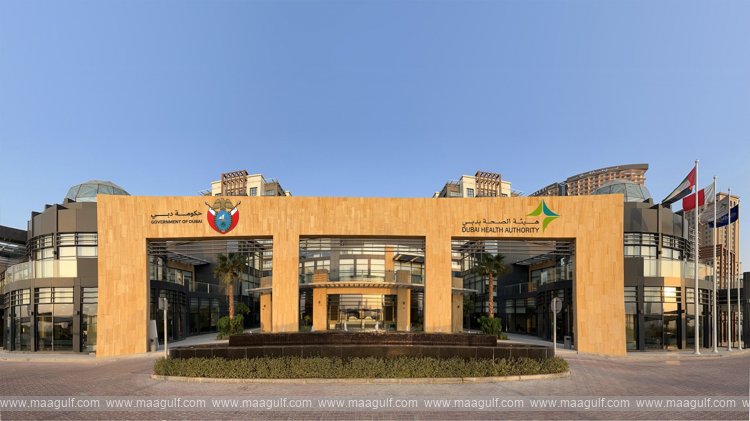
Dubai: The 2024 Health Accounts System of Dubai (HASD) has revealed a set of strong indicators reflecting the advancement of Dubai’s health insurance system and its growing role in supporting the local economy and enhancing quality of life.
Issued by the Dubai Health Authority (DHA), the HASD report shows that healthcare expenditure contributed 5.5% to Dubai’s Gross Domestic Product in 2024. The private sector emerged as a key partner in healthcare financing, accounting for approximately 50% of total healthcare spending—an indicator of the strength of public–private partnerships and their role in supporting Dubai’s vision to build a sustainable healthcare model founded on efficiency, competitiveness, and innovation.
Strong indicators
The report noted that total healthcare expenditure in Dubai reached approximately AED 24.55 billion in 2024, representing a 10% increase compared to 2023. Private financing sources—including private health insurance and household out-of-pocket payments—accounted for around 62% of total healthcare spending (AED 15.29 billion), while government funding sources contributed 38% (AED 9.26 billion).
This distribution reflects the nature of public–private collaboration in financing and delivering healthcare services. Expenditure on healthcare services delivered outside the emirate did not exceed 1% of total spending, underscoring the efficiency of the system and its ability to meet the vast majority of healthcare needs within Dubai.
The report also highlighted the strength and integration of Dubai’s health insurance ecosystem, which comprises 44 insurance companies, 16 claims management companies, 3,660 healthcare providers, and 139 insurance brokers. This reflects the breadth of coverage, operational efficiency, and ease of access to a wide range of high-quality healthcare services across the emirate.
HASD is based on the World Health Organization’s Health Accounts methodology, ensuring data accuracy and international comparability, and reinforcing Dubai’s position among health systems that adopt global best practices in measuring, analysing and monitoring healthcare expenditure.
An integrated model Dr. Alawi AlSheikh-Ali, Director General of the Dubai Health Authority, said: “The findings of the 2024 Health Accounts System of Dubai (HASD) confirm that Dubai’s health insurance system has reached an advanced level of readiness and stability, with the ability to balance financing efficiency, service quality, and long-term sustainability within an integrated model that aligns with Dubai’s future ambitions and reflects the vision of His Highness Sheikh Mohammed bin Rashid Al Maktoum, Vice President and Prime Minister of the UAE and Ruler of Dubai, to position Dubai among the world’s leading cities in quality of life.”
He added that the continued development of Dubai’s health insurance system receives ongoing support and guidance from His Highness Sheikh Hamdan bin Mohammed bin Rashid Al Maktoum, Crown Prince of Dubai, Deputy Prime Minister and Minister of Defence of the UAE, and Chairman of The Executive Council of Dubai, translating His Highness’s directives to build an advanced healthcare system that places people at the forefront of priorities.
Operational efficiency
Asma Al Sharif, Chief Executive Officer of Dubai Health Insurance Corporation at the Dubai Health Authority said: “The HASD 2024 report reflects the continued evolution of Dubai’s health insurance system and confirms its transition to a more efficient and integrated phase across population coverage, claims management, and the expansion of the healthcare provider network.”
She noted that the strong performance indicators achieved by the system, the growing number of beneficiaries, and the significant increase in financial claims—within a network comprising thousands of healthcare providers, insurance brokers, and claims management entities—demonstrate the high level of integration and operational efficiency reached by Dubai’s health insurance system.
Wedad Ahmed Binbraik, Director of Health Economics and Insurance Policies Department at DHA’s Dubai Health Insurance Corporation Sector, said: “ HASD represents a pivotal strategic tool supporting health planning and evidence-based policymaking. It reflects the maturity of the institutional framework for measuring and analysing healthcare expenditure in line with internationally recognised methodologies and standards.”
She added that the adoption of advanced analytical approaches within HASD reinforces Dubai’s position as a leading model in health governance, enhances the health sector’s readiness to respond efficiently and flexibly to future changes, and provides a comprehensive view to guide resource allocation, strengthen system sustainability, and align financing decisions with community health priorities and quality of life in the emirate.

తాజా వార్తలు
- ఒమన్లో 2.56 లక్షలకు వృద్ధుల సంఖ్య..!!
- Four astronauts reach International Space Station in record time
- సౌదీలో హౌతీ బాలిస్టిక్ మిసైల్ కూల్చివేత..!!
- అక్టోబర్ నెలంతా దేశవ్యాప్త నిరసనలు.. CJP కీలక పిలుపు
- పైలట్ స్మిత్ మచ్చర్ కోలుకుంటున్నారు..భారత రాయబారి..!!
- మదీనాలో హౌతీ దాడి.. తీవ్రంగా ఖండించిన ఖతార్..!!
- షార్జా జ్యువెలరీ షోలో ప్రపంచంలోనే ఎత్తైన బంగారు బార్..
- కువైట్లో వర్షాలు.. తగ్గనున్న ఉష్ణోగ్రతలు..!!
- వన్డే ప్రపంచకప్ షెడ్యూల్ విడుదల..
- భారతీయులకు గుడ్ న్యూస్..హెచ్-1బి వీసా ఫీజు పై కీలక నిర్ణయం


