
India and Italy Rewire Asia-Europe Trade Route
- May 25, 2026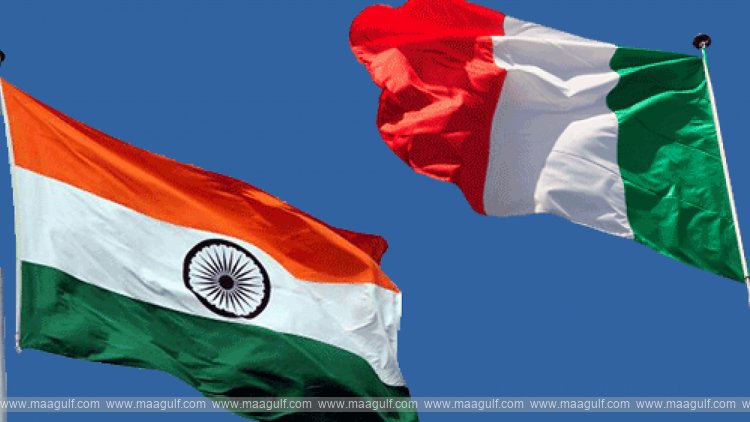
In Rome, India and Italy give the India-Middle East-Europe corridor its first operational architecture, and India's wider chokepoint strategy a credible European terminus.
Rahul PAWA | x - @imrahulpawa
In September 2023, on the sidelines of the G20 Summit in New Delhi, Narendra Modi and Giorgia Meloni were among the eight signatories to a memorandum announcing the India-Middle East-Europe Economic Corridor (IMEC), a multimodal sea-rail-energy route linking Indian ports to Europe through West Asia, including Israel. The conversation that began there continued for nearly three years. On 20 May 2026, Modi arrived in Rome as the final leg of a five-nation tour that took him through the UAE, the Netherlands, Sweden and Norway. In Italy, it produced the most consequential bilateral output IMEC has seen. India and Italy elevated bilateral ties to a Special Strategic Partnership, signed a Memorandum of Understanding on maritime transport and ports with a dedicated joint working group, and committed to convene the first IMEC ministerial later this year.
The Rome handshake matters because it lands at a moment when global trade architecture has begun to look fragile. UNCTAD's Review of Maritime Transport 2024 documented Suez Canal tonnage cut by roughly 70 per cent and Cape of Good Hope arrivals surging 89 per cent during the Houthi disruption of the Red Sea. The IMF's May 2025 Regional Economic Outlook for the Middle East and Central Asia flagged declining Suez Canal receipts as a sustained fiscal pressure on Egypt and a regional spillover beyond it. That shock has since compounded with renewed pressure on the Strait of Hormuz, producing what the IEA's Oil Security and Emergency Response analysis identifies as the simultaneous exposure of both Bab el-Mandeb and Hormuz to state and non-state interdiction. Two of the world's most critical maritime chokepoints can now be contested at the same time.
IMEC is best read as one limb of a wider Indian strategy that already operates on two flanks. To the east, the Andaman and Nicobar Command and the Great Nicobar build-out, cleared through India's Ministry of Environment and conceived by NITI Aayog, give India standing leverage over the Strait of Malacca, the world's largest oil transit chokepoint, through which roughly 48 per cent of oil import volumes went to China in the first half of 2025 according to the US Energy Information Administration. To the west, Operation Sankalp, detailed in Indian Navy and Ministry of Defence briefings since early 2024, has turned the Indian Navy into the de facto escort and maritime domain awareness provider through Hormuz and Bab el-Mandeb. IMEC and the International North-South Transport Corridor are the structural extensions of that same approach, building redundancy against Suez, Bab el-Mandeb and Hormuz rather than chasing volume for its own sake. Rome is where the western limb began acquiring institutional form.
Three implications follow for global supply chains. The first is redundancy. The World Bank's Logistics Performance Index 2023 ranks the Suez-Red Sea route among the most concentrated single-corridor dependencies in the global trading system. A working IMEC offers the first credible structural alternative for Asia-Europe trade outside the Cape rerouting option. The second is critical minerals and clean energy. The IEA's Global Critical Minerals Outlook 2024 flagged concentration risk in processing and refining within a single jurisdiction, with China projected to hold close to half of global refining market value by 2030. IMEC is the first transcontinental framework to fuse extraction, processing and demand inside a value-aligned bloc, with green hydrogen, submarine data cables and electricity interconnectors carried alongside container freight. The third is terminus diversification. The Italian leg, with Trieste, Genoa and Taranto, offers alternative Mediterranean entry points beyond Haifa, reducing exposure to Chinese-operated terminals further east and giving the corridor a quieter, more resilient northern face.
From other capitals, the responses are easier to read in actions than in statements. Washington has been vocal. Trump called IMEC "one of the greatest trade routes in all of history" in February 2025, and the White House has sent advisers to Delhi for IMEC engagements. But the rhetoric has yet to produce a senior coordinator, a dedicated financing line, or the summit Trump himself promised. Beijing has said little, but the parallel acceleration of CPEC, the China-Kyrgyzstan-Uzbekistan railway and the Polar Silk Road tells its own story; so does the fact that Piraeus, IMEC's likeliest European node, is run by China's COSCO, which is what gives Italian ports their strategic edge. Moscow continues to back the International North-South Transport Corridor with India and Iran and to send discounted crude to Indian refineries, but its post-Ukraine closeness to Beijing makes any open embrace of IMEC awkward. None of these are stated positions. For now, these are the patterns India and Italy are writing into.
For both, the question is no longer whether IMEC has a future. It is whether the corridor can be built faster than the chokepoints close. Rome has settled governance and terminus redundancy. Financing remains the open question, and the world that IMEC is meant to insure against is not waiting.
Author is Director of Research at the Centre for Integrated and Holistic Studies, New Delhi. Formerly a Research Fellow at the Parliament of India. He writes on international law, frontier technologies, AI governance and global security.

తాజా వార్తలు
- సౌదీ అరేబియాలో భారీ వర్షాలు.. ఆకస్మిక వరదలు..!!
- యూఏఈలో వాతావరణ మార్పులు.. విమాన సర్వీసులకు అంతరాయం..!
- బహ్రెయిన్లో డెలివరీ బైక్ల కొత్త లైసెన్సులపై నిషేధం?
- ఖతార్లో 25 ఆరోగ్య కేంద్రాల ద్వారా హోమ్ వైద్య సేవలు..!!
- కువైట్లో నేచర్ రిజర్వ్ లో హంట్.. ఇద్దరు అరెస్ట్..!!
- ఒమన్లో ఎల్నినో ఎఫెక్ట్.. భారీ వర్షాలు, వరదలు..!
- క్యాన్సర్ రోగులకు గుడ్ న్యూస్ తెలిపిన సిటిజెన్స్ హాస్పిటల్
- రష్యా సంబంధిత ఆంక్షలు, సుంకాల అమలుపై ట్రంప్ తాత్కాలిక మినహాయింపు
- బంగ్లాదేశ్లో ఘోర అగ్ని ప్రమాదం..10 మంది సజీవ దహనం
- బ్రెయిన్ క్యాన్సర్తో పోరాడుతున్న బాలుడికి అండగా నిలిచిన కేటీఆర్


